Taproot Eco Blog

The Popularity of Native Plant Design and How to Bring it to Your Community

In recent years, there has been a noticeable shift in the landscape design world, with homeowners, businesses, and public parks alike embracing the diverse beauty and environmental benefits of native plant design. It’s an approach that blends aesthetics with ecology, resulting in stunning landscapes that are in harmony with their local environment.

For the uninitiated, native plant design refers to the practice of using plants that are indigenous to a specific geographical region in landscaping projects. These plants have evolved naturally over thousands of years to survive and thrive in local conditions, making them a sustainable and low-maintenance choice. The overall look is something that many clients can not wrap their head around, not to mention that to them it just looks ugly. When I first started out in this field 16 years ago, I would have definitely fit into this category – not only did I not know many native species but more importantly, it was not pleasing to my eye. Over time I grew to appreciate the native plant aesthetic by noticing its beauty in nature, not in a design, but on a local hike or in the mountains. Taking that natural native look to a backyard in West Knoxville became the next challenge. The ultimate challenge is getting clients’ to appreciate it on their own without the designer having to tell them how beautiful it is.

The growing popularity of native plant design can be attributed to several factors. Firstly, using native plants in landscaping projects greatly reduces the need for water, fertilizers, and pesticides, making them a more environmentally friendly choice. They also help to create habitats for local wildlife, contributing to the preservation of biodiversity. We have talked about this subject matter in previous articles and will continue to make the connection between native plant design and the beneficial effects it brings to local biodiversity.

In addition, native plants offer a sense of place and authenticity that can’t be replicated with exotic species. They help to maintain the distinctive characteristics of local landscapes, creating a strong connection between people and the natural world around them. Not to mention that natives have a much better survival rate because they are conditioned to thrive in local soil conditions, summer drought or frigid temperatures in the winter months. Look at Knoxville over the past 2 winters, we have had below normal temperatures that have wreaked havoc on some plant species. Most of the victims have been non-natives like boxwoods, crape myrtle, distylium or indian hawthorne.

Furthermore, the use of native plants has been linked to health benefits. Research shows that being in nature, particularly in green spaces that resemble natural ecosystems, can reduce stress and increase feelings of well-being. Find a park or some type of green space near your home that makes you feel calm and visit this place as often as possible. If you can accomplish this type of setting in your own backyard, even better.

As the climate crisis deepens, the importance of sustainable landscaping practices is becoming increasingly clear. Native plant design offers a practical and beautiful solution, helping to create resilient landscapes that can withstand the impacts of climate change. As we talked about earlier in the article, natives have an advantage over non-indigenous plants because the climate and soil conditions are not foreign to them and little acclimation is needed.

Another factor driving the popularity of native plant design is the trend towards outdoor living. As more people seek to make the most of their outdoor spaces, there is a growing demand for landscapes that are not only beautiful, but also functional and sustainable. It has taken some time but the public, overall, has started to see the beauty in this type of designing. It is no longer an aesthetic that is only pushed by landscape designers. It is an amazing feeling when you show up for a new lead and the first words out of the client’s mouth is, “native plant design.” Usually these types of clients are very knowledgeable which makes your job as a designer easier because they know what they want.

Despite its many benefits, native plant design does pose some challenges. Finding the right plants can be difficult, particularly in urban areas where native species may not be readily available. However, a growing number of nurseries are now specializing in native plants, making it easier than ever to incorporate them into your landscape design. In Knoxville we are especially lucky to have a non-profit organization that collects native plants from sites scheduled for construction and disperses them to the community. NPRS or Native Plant Rescue Squad will sell these reclaimed plants to the public and also do plant installations for private homeowners and community programs as well. Taproot recently worked with NPRS to complete a wildflower garden in the Island Home Community. NPRS is also a great source of information about native plant design and what each individual plant can do for the health and beauty of your garden.

I am always amazed by the native plant lovers that have not acquainted themselves with their local native nursery – at this point, they exist, I promise, you just have to make an effort to find them. I do not know a better way to spend an afternoon than slowly moving through a native plant collection and imagining the possibilities. It doesn’t matter whether it is for work or relaxation it is always time well spent.

In conclusion, the popularity of native plant design is a testament to a broader cultural shift towards sustainability and environmental consciousness. As we continue to grapple with the impacts of climate change, it’s likely that this trend will only continue to grow. So, whether you’re planning a major landscaping project or simply looking to add a touch of nature to your outdoor space, consider embracing the beauty and benefits of native plants, your community and local environment will thank you.

Island Home and the Native Plant Movement

  Taproot recently converted a backyard in Island Home, Knoxville from a mix of weeds, grasses and invasives into an eventual wildflower oasis complete with meandering walkways and a 30 foot fallen tree or “snag”. Most of the time fallen trees are cut up with a chainsaw and hauled off to a green waste site but these snags can have serve as a very productive piece of the ecological environment around it. In the realm of the usual suspect projects this one was definitely out of the box, but surely welcomed. Through the years, my dislike of turfgrass has grown quite intense. The amount of fossil fuels that are used up every year to fuel lawnmowers and the trucks/trailers that wind through our urban streets 9 months out of the year is staggering. Not to mention the grass treatment companies that make millions a year pumping poison onto our nicely manicured lawns or after a heavy rain, down the drains and into our watersheds. Unfortunately I worked for one of these companies many years ago and witnessed firsthand the sheer amount of product that is pumped out of these trucks every year. Think about 15 trucks a day carrying 300-400 gallons of weed killer/fertilizer that is sprayed onto lawns 360 days out of the year. Do the math, or on second thought, don’t. We have enough depressing things to deal with these days.

  Through years of being involved in the industry and observing the changes our local environment has undergone over my lifetime it is clear to me that we must make changes to our own personal landscape impact. We can effect not only our small ecosystem around us (backyard) but by learning and teaching can spread to our neighborhood, then to the community and beyond. The aforementioned Island Home neighborhood is quickly becoming one of these type communities. If you drive through the neighborhood there are several lots that have rid themselves of turf altogether. Some of them have been done by local designers, others by the homeowner with a little help from Stanley’s Greenhouse (a local company that specializes in native and obscure plants) and non-profits like NPRS (Native Plant Rescue Squad) who collect native plants from sites all over Knoxville and replant or sell them to locals for native plant installations. Sometimes all it takes is a mentor or information source (with the right information) to steer a potential homeowner who is looking to make changes in their landscape towards an all native landscape rather than going to Lowes and buying what looks cool.

  Keep in mind these are relatively small lots but the impact is still quite strong. The architecture of the neighborhood combines nicely with the native plant aesthetic – you have Craftsman style homes with subtle lines and simple elegance. Overall, the neighborhood has embraced the native plant movement and idea that you can help improve the environment by starting with your own property, big or small. The property we did this past fall was on Maplewood Drive which backs up to Baker Creek just before it empties into the Tennessee River. We eliminated invasive plants (Shrub Honeysuckle, Privet and Autumn Olive) that had grown between the new wildflower area and the property line. The Baker Creek watershed is a perfect example of a wildlife ‘corridor’ as it runs behind Maplewood Drive and through more residential areas on its way to the Tennessee River. Wildlife corridors establish ‘safezones’ for animals and insects as they move through our environment that are not interrupted by roads, railways or other human establishment. These corridors are essential when it comes to overall wildlife health by allowing individuals to move through populations cutting down on inbreeding and other factors that arise in isolated populations. Established corridors would also help cut down on road kill, reduce the local flora devastation done in small areas where deer are isolated and allow an overall healthier diet for animals by providing them with a larger area to forage. The idea is to eventually connect enough of these corridors together to form large, uninterrupted wildlife zones that serve as wildlife management areas that are managed by the community and individual landowners.


  Knoxville, as a whole is becoming more open to this type of landscape aesthetic. More and more homeowners are at least considering non-turf landscapes because of the impact to the environment, no lawnmowers to pay every week and in the end a more pleasing overall look to your property. Keep in mind there have been numerous studies done that affirm that we as humans are healthier when we are in nature, amongst the trees or in a wildflower meadow. We were not meant as a species to only walk through asphalt paved streets and only see plants when we venture out into the country someplace. We can have what we need to be happy right there in our own yards – trees, shade, flower blooms and occasional wildlife. Lawns as we know them today represent vanity in its purest form, they originated when farmers or landowners became so wealthy that they did not have to farm all of their land every year. Instead they grew turf in these areas as a form of pride to show that they had more than they needed. Instead of using these unneeded areas as grasslands or wildflower pastures, the landowners began the practice of creating environmental dead zones, a practice that is still being used today.

Image courtesy of Biodiversity For All

  From an economic standpoint, the practice of mowing our yards once a week is either too costly or time consuming depending on if you do it yourself or pay someone else to do it. Over time it would certainly save money to spend the upfront cost of naturalizing our yards whether it be with plants or some other form of groundcover like clover, sedum or creeping juniper. Or it can be done in stages by spreading the cost out over several years. Just allow yourself to think about how much healthier our environment would be if we all eliminated turf or at least the mowing of it 20 times a year. By eliminating turf mowing we also eliminate lawn care companies that spew poison all over the place that kill our insects and encourage a stagnant landscape. The worst problem this presents is what do we do with all the lawnmowers we no longer need, but that would be a good problem to have.

Stay tuned to see how the Island Home wildflower garden comes together in 2024 and all of our future projects that fall in this category…

3 Reasons Why You Should Install a Native Plant Design

The East Tennessee Edition

If you do not appreciate the beauty of a cohesive native plant design then I feel bad for you. If you still want the benefits of a native plant garden but are not sold on the aesthetics then this article is for you. When I first started to hear about the value of native plants I have to admit I was not sold on the beauty part. The native plants did not resemble the ornamental exotic plants I was used to seeing in most landscape designs and I could not get my brain to make the switch. It took several years for me to truly appreciate the native aesthetic and now I cringe when looking at the designs I previously thought were ‘pretty.’ There is no doubt that the native plants of east Tennessee have a different look than ornamentals but once you understand the benefits that natives bring it may help to sway your opinion and help you see the beauty beneath the surface. This article will talk about how East Tennessee natives gain an advantage over exotics when it comes to soil, climate and most importantly, root structure.
Reduction of chemical use, fertilizers and irrigation

One of the main benefits of a native plant design is what I hear most clients say at any given initial visit – ‘low maintenance.’ Natives require less water, less fertilizing and less overall care than your typical exotic landscape plant. This is not a theory but a practice that these plants have followed for thousands of years to arrive where they are now. Native plants have learned how to endure clay-rich, dense soils, and high-fluctuating temperatures to not only survive, but create one of the most species-rich areas in the world. Native plants have created symbiotic relationships with insects/animals that help them proliferate and adapt to changes as they occur. In other words, native plants do not need your chemicals for killing insects, supplemental water during dry spells (although a little would not hurt) or fertilizers to supplement the lack of available nutrients.

Beneficial Root Structure

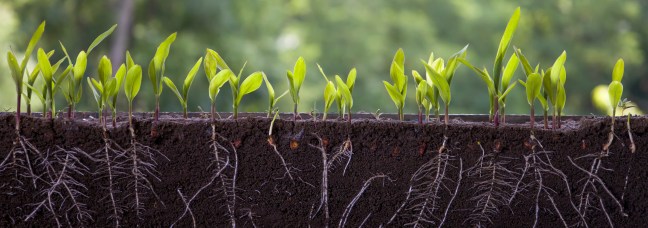
Now we get to talk about root structure – one of our favorite subjects when it comes to the advantages of natives. The taproot of a native East Tennessee plant is what gives it the upper hand when competing against other plants and trying to survive the extreme nature of our climate. As seen in the picture above, some native perennials have an extremely long taproot that sometimes will extend several feet in the ground. These ‘soil breakers’ provide an important service to the soil and more specifically to the plants around it. In East Tennessee the soil is very clay-rich and it keeps nutrients from being readily available to plants. The soil breakers send down deep taproots that break this clay layer up and allow nutrients to flow more freely. False blue indigo, little bluestem, black-eyed susan and Tennessee coneflower often have roots that extend 5-10 feet in the ground. The deep roots allow these plants to survive during the summer droughts we have in August and September.

Supports Bees, Insects and Animals

One of the most fun parts about installing a native plant design is waiting to see what will show up. The list of potential visitors is quite long whether it is a milkweed beetle, prey mantis or a noisy hummingbird. I just did an article about what insects you might see after planting natives that you might want to check out for further discovery. It is truly amazing what you can find if you take the time to look closely. It does not take the native fauna long to locate your oasis and take advantage of it. We have all heard about the plight of bees and their struggle to find sustainable habitat in an ever changing world of constant development. Your native perennials will provide pollen for the bees and at times the buzzing is audible from far away as they descend on your blooming plants.

Swallowtail Butterfly/Butterfly Weed

Bees are a mainstay in every native garden but you might also see ambush bug, jumping spiders, prey mantis or monarch butterflies. The video above shows a swallowtail indulging in some butterfly weed. This is what you can come to expect in your garden if you pay attention and the feeling that comes with providing forage for the ecosystem around you is quite addictive. It makes you start wondering what things would be like if everyone had a native plant garden. I know the bees and insects would be much happier and there would be something interesting outside to pull us away from always looking at a screen. Bird watching is another unexpected product of installing a pollinator garden. The birds will use the plants for food, protection and hunting grounds for insects. A native plant installation is the missing link in many relationships that you would have never known existed without creating the right environment for it. These types of spaces need to exist in every neighborhood across the country and not just in national parks and undeveloped areas.

Magnolia Green Jumper

We have covered 3 of the most important reasons to install a native plant design in East Tennessee and what you can expect to see as your plants grow in. You will not be disappointed by spending some time immersed in your garden and paying attention to the relationships that it fosters. This observation brings to light the complexity of our ecosystem and how fragile it really is. On the positive side, it also illustrates how quickly our ecosystem can recover and take advantage of new resources as they develop. When you plant a native garden you are helping prolong a relationship between environment and plant that go back thousands of years and you are doing your small part to make sure that relationship continues.

Plant It and They Will Come

If you have ever seen the movie ‘Field of Dreams’ you know the famous line, “If you build it, he will come.” This line is what Ray Kinsella, played by Kevin Costner, hears in his head when he is building a baseball field in the middle of a corn field in Iowa. The ‘he’ referred to a dead baseball player named ‘Shoeless’ Joe Jackson, who was disgraced in the cheating scandal of 1919 when the Chicago White Sox were found guilty of throwing the World Series. ‘Shoeless’ Joe played exceptionally well during the series and this lead many people to believe he did not participate in the scandal.

The voice Ray kept hearing in his head is what convinced him to keep going when everything and everyone was trying to tell him it was not a good idea. When installing a native plant garden you might face similar struggles with your neighbors saying they will not like it or you wondering if it will look like a bunch of weeds. Fear not because the voice inside your head is saying, “Plant it, and they will come.” Plant your native garden and your insect population will grow exponentially in the next few years. You will have created an oasis for the insects in your ecosystem where they have all they need and native plants that they recognize.

Planting and watching a newly installed native flower garden is a joy that you have to experience to understand. Pride of accomplishment and hope for the future combine to create a very satisfied feeling that can go on indefinitely. A second wave of joy comes when you see that the surrounding ecosystem has noticed your contribution and starts to use it. The first time you see a butterfly flittering around your garden doing its job as a pollinator is quite a rush.

At our home in west Knoxville we have a small (1,000 square feet) native plant garden that contains roughly 40 different species and has increasingly become a home for insects that use these plants to survive. Over the last 2 years my son, Talon, has become interested in photography and more specifically – macro photography. Macro photography is extreme close-up photography of small subject matter like insects, flowers, and interesting textures. In the case of my son, our native plant garden provided the perfect opportunity to photograph these insects.

I knew before he started taking pictures of our garden that there were insects on the plants and that we had provided a sanctuary of sorts for our little part of the world. I did not, however, realize the diversity and outright beauty that these insects bring to the space. I was truly amazed at two things: the number and variety of insects using our plants in various ways, along with the curiosity of my son to find as many new insects as possible. We spent several hours in our front landscape bed discovering new creatures and taking note of which plants they liked the best.

Milkweed Beetle

In the landscape design world there are many hot button terms and ideals that fluctuate with time. Plant communities are a big deal in the realm of native plant design right now. Plants that grow together and compliment each other in appearance, size and root growth. With native plant communities come native insect communities. The insects in our native garden just seemed to appear there over night like they were summoned from afar. The ‘community’ in this instance are native plants providing food, cover and hunting grounds for a native insect population that has relied on this resource for thousands of years. By planting natives you are helping this community broaden and in a sense recover from the destruction of much its existing territory.

How do insects find the native plants?

They use a combination of specialized sensory mechanisms, including chemical signals (scents and tastes) and visual cues shaped by thousands of years of co-evolution. In other words, the insects found in east Tennessee do not recognize exotic plants. Exotics do not give off the right smells or have the appearance the insects are looking for. So you may have a beautiful landscape in your yard with stunning ornamental plants and blooms all year round but you will never have a thriving insect population because your plants are invisible to them. You can lump these ornamental landscapes in with turf grass and call them dead zones because compared to a native plant garden there is little to nothing going on in them.

Ambush Bug

You can see in the picture above that rudbeckia or ‘black-eyed’ susan attracts native insects. We have a mass of rudbeckia and that was the first place my son would go to find jumping spiders (his favorite) or whatever decided to use the native plant that day. One of the coolest looking bugs was the Ambush bug (above) that we found on the rudbeckia. These ambush predators hide in the leaves, petals and blooms of native plants waiting for other insects to come along. They use armored forelimbs to reach out and snag their prey while the appendages on each arm hold the insect in place so it can be eaten. My son wanted to do some research on the Ambush bug and found out that it uses bright colored plant blooms to lure its prey and the rudbeckia fits into this method perfectly.

Jumping Spider

Do not let the negative voices in your head or the picky neighbor that might not like it deter you from creating your native plant garden. It will take some work and sometimes it will feel overwhelming but in the end, it is worth it. Observing bees locate your perennials or a butterfly flittering from bloom to bloom is rewarding and relaxing at the same time. Making your contribution to help reform a critical piece of a healthy environment is what it will take to reconnect a declining insect population to their native companions. This reformation can start with a small space in YOUR yard if you listen to the voice in your head and “Plant it.”

Photos courtesy of Talon Adkins – Instagram @talon_macro

Hardscape the Natural Way

At Taproot we have a saying, “Natural stone always works.”

I will always try to persuade a client to do a boulder wall over a block retaining wall or flagstone instead of a paver patio. Don’t get me wrong, there are plenty of nice paver colors and patterns with retaining wall block to match, and in certain applications these could be the right choice. In the end, we are going with a natural product when we can. Natural stone has a warmth and feel that soothes your senses and relaxes the brain. Natural stone blends with any landscape and when installed by the right designer should feel like it has been there forever.

That is the look I am going for – make it timeless.

When picking out a paver or retaining wall block you have a choices – texture, color, shape and size. With natural stone it is the same but much more fun, of course there are textures and colors but also variance of color, shape and size. As much as I love plant shopping at nurseries I think looking at stone could be even better! I find myself looking forward to other projects and have to stop myself from day dreaming. Natural stone provides a welcoming feeling to any space and the stone itself, weathered by elements and time, have an effect on you that you may not even realize.

From the outside the stone is a riddle:
No one knows how to answer it.
Yet within, it must be cool and quiet
Even though a cow steps on it full weight,
Even though a child throws it in a river;
The stone sinks, slow, unperturbed
To the river bottom
Where the fishes come to knock on it
And listen.

This a line from a poem about stone by Charles Simic who seems to understand the value of natural stone and the effect it has on the soul. Stone has a wisdom that no one can comprehend - it has seen time pass and weathered all storms. The stone is changed by heat, pressure and water but still maintains its original nature and it becomes a story book of sorts to what has happened in the past.

There has been study after study done to prove the people that surround themselves with nature, as in where they live or how they spend their free time, are much more balanced mentally and physically. Forest bathing has become a popular phrase over the last decade because it works and people find comfort in doing it. I would love for a similar study to be done on natural stone and its effects on the human design. I think natural stone has a calming effect especially when it is incorporated into a landscape design correctly. Imagine coming home from work and needing to relax and unwind. Your backyard with trees, shrubs, flowers and hopefully some stone work will do the trick – a calming oasis that your mind and body can recover in. You may not understand exactly why it works but the plants and especially the stone knows.

So when you are deciding on your next landscape project or are planning a makeover for your backyard remember the power of natural stone. You can use stone in so many ways – not only does it look good and provide a timeless look to your design, but it also soothes the soul and calms the mind. People pay $200 an hour for therapy and all you have to do is install some natural stone, pull up your favorite chair and sit down. You can thank me later.

What does ecodesign really mean?

“Ecodesign is built on principles of efficient resource use, product longevity and repairability, minimized environmental impact throughout the product lifecycle, and sustainable end-of-life options.”

I often get asked by potential clients, “What does the ‘eco’ in your business name mean?”

The truth is it means different things for different jobs but essentially ecodesign means we are installing a landscape plan that will sustain itself, it will not need outside resources to maintain, nor will it detract from the environment around it. Sounds simple, and really it is, but somehow thru industry practices and misinformation, those common sense ideals have not been completely lost but muddled a bit.

The number one way that we, as landscape designers, can do to help the overall ecology of a given site is to plant native species. You will have to read several of our articles about native plants and all of the wonderful benefits that planting with natives provides, but for the purpose of this discussion we will just say that they have the best hope for survival and will contribute the most to the environment around it.

The term ecodesign many times is associated with product development, packaging and overall impact to the environment. The diagram above shows 8 factors that contribute to a product having a proper ecodesign. We can use these same principles in a landscape design scenario to ensure that the finished product is viable for the environment around it.

Reduction of Raw Materials

As a designer I always push the client towards a natural product when it comes to hardscape. Flagstone instead of pavers, boulder walls instead of retaining walls and, of course, native species over non-native. From an aesthetic view it looks better and seems more natural. I am trying to produce a design that looks like it has been there for a while and natural stone does the trick.

For the purposes of this article, natural stone provides the most sustainable product since it will last longer than manufactured products. Pavers and retaining wall block have a lengthy production process, cost money to transport and are pretty darn expensive. My stone supplier breaks his stone out with one machine, loads it on a truck and delivers it to my jobsite. Think about the difference in impact between these products, in this case the steps it takes to put the finished product on the jobsite.

Promotion of Reuse and Recycling

Every year starting around Halloween homeowners begin the unenviable task of leaf removal. They rake them up in piles and bag them up or blow them to the curb for the city to collect. These same people will then pay hundreds of dollars for someone to come fertilize their lawn with unnatural products that are really only solving the problem temporarily. Leaves are a great source of nutrients, all you have to do is break them down into smaller pieces to speed up the decomposition rate for turf areas. Leaves provide nitrogen, phosphorous and potassium while at the same time increasing water retention. If you don’t want to risk the leaves smothering the grass, simply blow all the leaves into your landscape beds to help ‘winterize’ your perennials. The added insulation will help plants survive cold temperatures and then provide nutrient rich mulch in the spring.

Reduction of Carbon Dioxide Emissions

This is an easy one – plants are the best way to combat carbon dioxide emissions in your ecosystem. More plants will increase the overall oxygen content of the air around you. Algae bioreactors can also be produced in a DIY setting in your backyard thru a water feature like a pond. Obviously these CO2 scrubbers are very small scaled on their own but combined with other participators can be increased exponentially.

You can also produce ‘natural’ water features by sequestering water on your property. I am working on a project right now where a client has a storm water drainage creek that splits her lot. We are going thru scenarios where we partially damn the creek permanently or for just a few months to allow the surrounding area to be rejuvenated. We would be acting like beavers for the local ecosystem. The benefits are limitless – groundwater retention, wetland plant seed germination, algae production, insects coming into the area and laying larva while also preventing erosion from high-speed run-off.

Less Impact on Environment

Anything we do as eco-driven landscape designers should not negatively impact the environment and if it does then we should not do it – no matter how much pressure we get from a client. Someone has to be the steward of the environment and who better to do it than the ones who know it best? Eco-design can mean many things from product development to installing a run-off pond in someone’s backyard. It is all important and has an eventual impact. It sounds silly but every little bit helps and if designers would create their designs with this idea in mind we could lead the way towards a more sustainable future.

Taproot Returns to its Roots in Plant Production

Taproot Eco Design is getting back into the plant nursery business. We have spent the last several years establishing Taproot Eco Design in the Knoxville/Maryville landscape markets and we want to get back into the plant production business, but on a smaller scale. The amount of money that landscape installers spend on plants is quite large over the course of a year – in excess of $40,000 for us. Any amount of these plants that we can produce ourselves is money straight into our pocket. With issues like inconsistent availability, poor quality or simply not enough stock, we decided that growing our own plants was the way to go. Taproot started out on a small piece of land in Hardin Valley (pictured above), we had no idea what we were doing but were driven by a passion for plants and a willingness to learn.

The main theme of one of my favorite books, Zen Mind, Beginner’s Mind by Shunryu Suzuki, talks about always maintaining the beginner’s mind in your meditation practice. The beginner’s mind is excited, passionate and always open to new ideas. The opening of the book says: “In the beginner’s mind there are many possibilities, but in the expert’s there are few.” Someone that approaches landscape design with a beginner’s mind will never think they know it all and understand that becoming an expert in this business means that you learn something new every day. If anyone in the the landscape industry ever tells you they have it all figured out – run away from that person as fast as you can and don’t look back.

Taproot Nursery will mainly produce the plants that we use in our design/installs – lots of grasses, sedges, native perennials, several types of ferns, hosta and succulents. Obviously we can not produce ALL the plants we use in a given design like trees, most shrubs or larger scale specimens because we simply do not have the room. With that being said, it is amazing how much you can produce in such a small area given that a 1 gallon pot does not require much space. We do have the advantage of having full sun, partial shade and full shade all in the same small backyard. We can grow full shade ferns 70 feet away from full sun perennials like amsonia hubrichtii. This a hard set up to create artificially (shade cloth) so we will not waste what we have been afforded.

Taproot has two main goals that need to reach for this endeavor to be successful – reduce the cost of plant material by 25% by growing our own stock and learn more about the plants we install. Perfecting the process of growing plants that we use in our designs will give us a more in-depth knowledge of plant processes and in turn give every plant we install the best shot at success. By immersing ourselves in the plant production process we hope that better overall plant health and noticing the signs of plant sickness will make us better at what we do and ultimately will benefit our customers and their landscapes.

Stay tuned as we chronicle the process of converting a suburban backyard into a fully functioning native plant nursery. We will construct plant growing tiers by using an old trampoline frame, create a rain catchment system that will allow us to use untreated water most of the year and dig out a pond for water sequestration. We are excited and hope you can come along for the ride.

Adaptable Native Plant Design Principles

As more people become environmentally conscious, the trend of incorporating native plants into landscape designs is rapidly gaining momentum. Native plants are not only a sustainable choice but also offer a unique aesthetic appeal that can greatly enhance the overall look of your garden or landscape. Native plant design is an acquired taste and not always appreciated by everyone so educating people on the benefits is essential.

Native plants refer to the plants that have evolved and adapted to your specific geographical area over thousands of years. They require less maintenance, are more resistant to pests and diseases, and are more likely to thrive than imported or exotic plants. This makes them a perfect fit for those interested in eco-friendly, low-maintenance landscaping. Not to mention that native plants provide food and forage for native species of animals and the ever important insects in your area.

Creating a seamless blend of form and function, native plants provide a natural and authentic feel to your outdoor space. They help to maintain the local biodiversity by providing food and habitat for local wildlife such as birds, butterflies, and other beneficial insects. Native plants typically have a deeper root system which makes them more tolerant to drought and relieve compaction of the surrounding soil. In East Tennessee this is especially important because of the 4-6 week droughts we have in late summer and with climate change, some small droughts in the Spring.

A well thought out landscape design with native plants can also help in water conservation. The reason being, once established, native plants typically require less water than non-native counterparts as they are naturally adapted to the local climate. This makes them a great choice for those living in areas with water restrictions or those interested in reducing their water usage.

How can you start incorporating native plants into your landscape design?

Start by researching which plants are native to your area. You can do this by visiting a local nursery, consulting with a local landscaper, or researching online. Locally, around Knoxville we have excellent native plant nurseries – Riverdale, Overhill Gardens, Tennessee NatureScapes and Stanley’s Greenhouse are all within reasonable driving distance, carry almost exclusively native plants and have very helpful staff that are knowledgeable and friendly. There is no better resource for plant placement and care than an experienced nursery worker, they have seen it all and usually know what is best for your garden. Any plant you buy from this type of nursery will have a better chance of survival than plant material bought from a big box store where the plants could be grown anywhere.

Look at the space you have available. Consider the soil type, sunlight exposure, and the overall climate. This will help you choose plants that will thrive in your specific conditions. This is a step that is most commonly left out by design amateurs and also professional designers that are just getting started. Good plant selection is hard enough without setting the specimen up for failure right from the start. By putting a full sun perennial deep in the shade you are not always going to kill it but it will never reach its full potential.

Choose a variety of native plants that offer different colors, textures, and sizes to create an appealing and diverse landscape. Consider flowering plants for color, grasses for texture, and trees or shrubs for size and structure. Native plant design has evolved over the last decade to include a more organized structure and appeal to clients that do not care for the messy look that so many enjoy. Simply grouping up similar colors or creating “drifts” of one species can organize the garden and pull the eye of the observer to certain spots within the design.

Think about how you want your landscape to look. Do you want a formal design with structured beds, or a more natural look? Native plants can accommodate both styles. A growing design trend is to incorporate native plants into a structured base. Creating division by using hedgerows with boxwood or some other evergreen will create breaks in the landscape that allow for clients that want a more organized look. This design principle is one of the main elements in the English Cottage look – controlled chaos as it is sometimes referred to.

While native plants typically require less maintenance, they still need care. Regular watering until established, occasional pruning, and yearly mulching can help your plants grow strong and stay healthy. The native plant design aesthetic lends itself to fewer weeds because so much of the available space will be taken up by plant material and what open space there is will be filled in the following season as seeds move across the site. This is very much the opposite of modern design where clients want large spaces around each plant which leaves available sunlight for emerging weeds. This aesthetic is not pleasing to all customers so you have to get a feel for how far you can push them towards sustainable landscape design. The clients that come to you with these ideas are the best because you only have to educate and ensure them about native plant gardening and not convince them to follow a completely foreign idea.

Incorporating native plants into your landscape design is not just about creating a beautiful outdoor space. It’s also about creating a sustainable and eco-friendly environment that supports local wildlife. So, why not give native plants a try? With careful planning and design, you can create a beautiful aesthetic to come home to while also contributing to the conservation of your local biome.

Check out taprootecodesign.com for ideas!!

Climate Change Rebuttal

Harnessing the Power of Native Plants: A Climate Change Solution

Climate change is an undeniable reality, and its impacts are becoming increasingly evident around the world. Amidst this crisis, native plants offer a ray of hope. Native to specific regions and well-adapted to local climates, these plants have the potential to combat climate change and restore ecological balance. In this article, we will explore the importance of native plants and how they can be our allies in the battle against climate change.

One of the key strengths of native plants lies in their ability to withstand and adapt to changing climatic conditions. Over centuries, these plants have evolved in specific regions, developing unique traits that allow them to thrive in their native habitats. Their deep root systems, drought tolerance, and resistance to local pests and diseases make them highly resilient to the challenges posed by climate change. In a world where extreme weather events are becoming more frequent, native plants can act as a buffer, helping ecosystems withstand the impacts of climate change.

As designers, we have forced plants to adapt to climates that may not suit them and by doing so have not helped the environment around us either. When we “move” plants away from where they have naturally developed over thousands of years, we take away all the work they have done to successfully exist in their local environment. By doing so we put them in a new environment where they have to start over and many times even though they survive, they do not thrive in their new locations.

Native plants are excellent allies in the fight against climate change due to their impressive carbon sequestration capabilities. Through photosynthesis, these plants absorb carbon dioxide from the atmosphere, converting it into oxygen and storing the carbon in their biomass and soil. Native plant communities have a unique ability to accumulate and store carbon, making them essential for reducing greenhouse gas emissions and mitigating climate change. By incorporating native plants into our landscapes, we can enhance carbon sequestration and contribute to a healthier planet.

There are millions of dollars being spent on research into carbon sequestration and even more money spent on its application. Plants can do this for us naturally without all of the by products that come from the construction of these systems.

Climate change poses a significant threat to biodiversity, as species struggle to adapt to rapidly changing conditions. Native plants play a vital role in preserving biodiversity by providing crucial habitats for a variety of animal and insect species. Birds, pollinators, and other wildlife rely on native plant communities for food, shelter, and nesting sites. By embracing native plants, we can restore disrupted ecosystems, enhance biodiversity, and protect vulnerable species from the impacts of climate change. Every time we plant a non-native species in our yard we take away an opportunity to diversify our local habitat. That small plot now taken up by a non-useful plant does not contribute anything positive to local biodiversity and becomes a dead spot, similar to what our lawns have become.

Native plants are particularly adept at conserving water and maintaining soil health. Their deep root systems improve soil structure, allowing for better water infiltration and retention. This helps mitigate the effects of drought by reducing water runoff and increasing groundwater recharge. Additionally, native plants help prevent soil erosion and nutrient loss, ensuring the long-term health and productivity of the land. By planting native species, we can conserve water resources, prevent the loss of vital nutrients in our top layers of soil and improve the sustainability of our overall plant life.

This is an important point to make with the local soil content being what it is. Anyone that has ever tried to plant anything in East Tennessee can attest to the clay content of our soils. Clay is wet, dense and heavy like concrete. This being said, our local plant population thrives in it and our local area supports more plant species than most places in the world. Just because so many species of plants call our clay-rich soils home does not mean imports fare as well. Many non-native plants can not handle our intense dry summers or minimal nutrients in the top layers of our soil.

Native plants solve climate change…sounds good doesn’t it? Is it possible? No one knows but it seems about as realistic as a billion dollar machine that removes carbon from the air. Why don’t we just use the things that evolution created for this exact purpose? PLANTS.

We just have to figure out what plants are the best and most efficient carbon scrubbers and disperse them properly. Most likely the answer will be that native plants in their native areas are the the best carbon scrubbers and we should figure out how to give them an advantage over their invaders.

Urban Wildflower Gardening


In the concrete jungles of urban areas, it’s easy to feel disconnected from nature. But what if you could transform your small patch of land into an oasis filled with wildflowers and native grasses? Urban Wildflower gardening in urban areas is a growing trend that not only adds a touch of natural beauty to our surroundings but also provides essential habitats for pollinators and other wildlife, including insects. Downtown Knoxville is buoyed by the success of the Urban Wilderness initiative where large areas have been saved from further development by becoming walking/mountain biking trails for public use. As successful as this program has been, we need to take it a step further and allow our downtown to mimic the wilderness around it. In this blog entry, we will explore the benefits of wildflower gardening in urban areas and provide some tips to help you get started on your own urban wildflower garden.

1. The Benefits of Urban Wildflower Gardening:
– Enhancing Biodiversity: Urban areas often lack natural habitats. By planting wildflowers, you can create a welcoming space for bees, butterflies, birds, and other pollinators, promoting biodiversity and helping to sustain local ecosystems.
– Improving Air Quality: Wildflowers absorb carbon dioxide and release oxygen, helping to improve air quality in urban environments and combatting the effects of pollution. We can not see what we are breathing in downtown areas, many times it is a mixture of car pollution – ambient (outdoor) fine particle air pollution (PM2.5) and nitrogen dioxide (NO2), which can be filtered and minimized with the presence of a proper urban landscape. Sometimes I wish we could see the benefit of plants in our environment, actually see plants taking in carbon dioxide (bad) and releasing oxygen (good) right before our very eyes. This would at least convince some of the skeptics of the value that plants bring to our world and that without them we could not exist. Unfortunately, many people have to see something with their own eyes before they believe it or understand its importance.
– Creating Beauty and Serenity: Wildflowers bring a burst of color and beauty to urban landscapes, transforming dull spaces into vibrant and visually appealing areas. They also provide a sense of serenity and tranquility, offering a respite from the hustle and bustle of city life. Studies have been done that confirm the fact that we are genuinely happier and more productive if we have trees and green scape readily available. Whether this means trees outside of your office window or a quiet, landscaped courtyard where you can eat lunch, the benefits of outdoor spaces filled with plants is immense when it comes to good mental health.

2. Choosing the Right Wildflowers for Urban Gardens:
– Native Species: Selecting native wildflowers is crucial as they are well-adapted to the local climate and soil conditions. They also play a vital role in supporting indigenous wildlife. We have talked about this in previous articles – native wildflowers and shrubs attract native species and insects that have no use for plants like nandina or the ornamental garden juniper we used for groundcover. In most cases, native species will eat the plants they are familiar with or what they have traditionally eaten.
– Low-Maintenance Varieties: Opt for wildflowers that are low-maintenance and require minimal watering or fertilization. This will make it easier to maintain your urban garden without compromising its aesthetics. Drought tolerance should be the number one factor when choosing your plants because most urban landscapes do not have the ability to draw water from far away. These plants usually only have a small plot of soil with minimal depth to survive in so the ability to go long periods without water is key.
– Long Bloom Periods: Look for wildflowers that have extended bloom periods, ensuring that your garden will have a continuous display of flowers throughout the season. This is important in any landscape design but particularly in urban landscapes because of the limited space that you have as a designer to make a visual impact. These factors make designing these spaces more challenging but also rewarding when you can produce an attractive urban setting with limited space and plant choices.

3. Designing and Maintaining Your Urban Wildflower Garden:
– Assess your Space: Determine the available space for your garden, whether it’s a small balcony, rooftop, or a tiny backyard. Consider factors like sunlight exposure and soil quality to ensure the success of your garden. The design process can be as simple as determining what native plants will work in the space, purchasing plants and then arranging them before installation. Being able to arrange in a way that maximizes the bloom time/seasonal interest in each plant while also spreading the blooms through all four seasons is easier said than done and can challenge the most experienced landscape designer.

If this is your first time designing and things do not go as planned, don’t worry, this is not a permanent planting. Gardening is truly a trial and error endeavor that is never completely mastered so run quickly away from anyone that says they have it all figured out. By using native plants you greatly increase your chances for success since they have a much better survival rate than the plant you buy from the big box store.
– Soil Preparation: Wildflowers generally prefer well-drained soil. Prepare the soil by removing any weeds or debris and add organic matter to improve its fertility and drainage. Keep in mind that most native wildflowers and the grasses that naturally accompany them are not accustom to rich, fertile soils but poor, nutrient deficient soils that contain rock and other unwanted material. Try to match this soil quality and do not use fluffy potting soils that you would use to plant your annual container garden.
– Planting Techniques: Follow the instructions on the seed packets for optimal planting depth and spacing. Scatter the seeds evenly or create small clusters or ‘drifts’ to accentuate the groupings of certain plants. Piet Oudolf, a Dutch garden designer, is an expert at this method, he creates wild spaces that have a loose structure to them that allows the viewer to appreciate the highlighted groups of plants that the designer wants to draw attention to. Lurie Garden in downtown Chicago is an Oudolf masterpiece that brings the beauty of the prairie to one of the busiest cities in the world. 

– Maintenance: The beauty of using native wildflowers and grasses is that your garden will only get so big. There will not be a whole lot of trimming or work to do on your space from year to year. Mainly it will be keeping the garden confined to the space for which it was intended and not spilling out onto walkways or driveways. Once a year, early February, the space will need to be cut down 3-4 inches from ground level to allow for new growth. Simply cut everything back and remove the waste, some finer clippings can be left behind to decompose into fertilizer. This is for wildflower/grass areas only, shrubs and trees will be trimmed according to their individual needs in the years that follow. A good tip to follow is shaping your trees/shrubs before they get to optimal size. Waiting until something is overgrown and then aggressively trimming it back stresses the plant out and may result in unwanted die off. When the plant is 2/3 its eventual size trim it back ever so slightly to slow down the growth rate. Then wait a season or two until the plant is close to optimal size and trim it again. This patient approach allows your plant to be “trained” to be the size you want instead of trying to force it.

In previous articles Taproot Eco Design has talked about the significance of wild space in our environment and hopefully some good advice on how to incorporate them at your house. Taproot deeply believes in this ideology and hopes to successfully promote this idea in the Knoxville area in the future. As with anything else we need the help and involvement of the community in this endeavor and hope we can humbly add to the growing movement we see going on around us. Progress is slow, but if you take the time to notice and no where to look, it is easy to see. To participate you can do nothing – just let your lawn grow, without cutting it, until Memorial Day and see what happens… Some wildflowers may appear, the existing grass you have will get taller and form seed heads, when long enough the grass will move with the wind and create a sound you probably have never heard while standing in your lawn. Imagine your own landscape providing you with peace and serenity that is hard to find sometimes in an urban setting and the benefit over time that could bring.